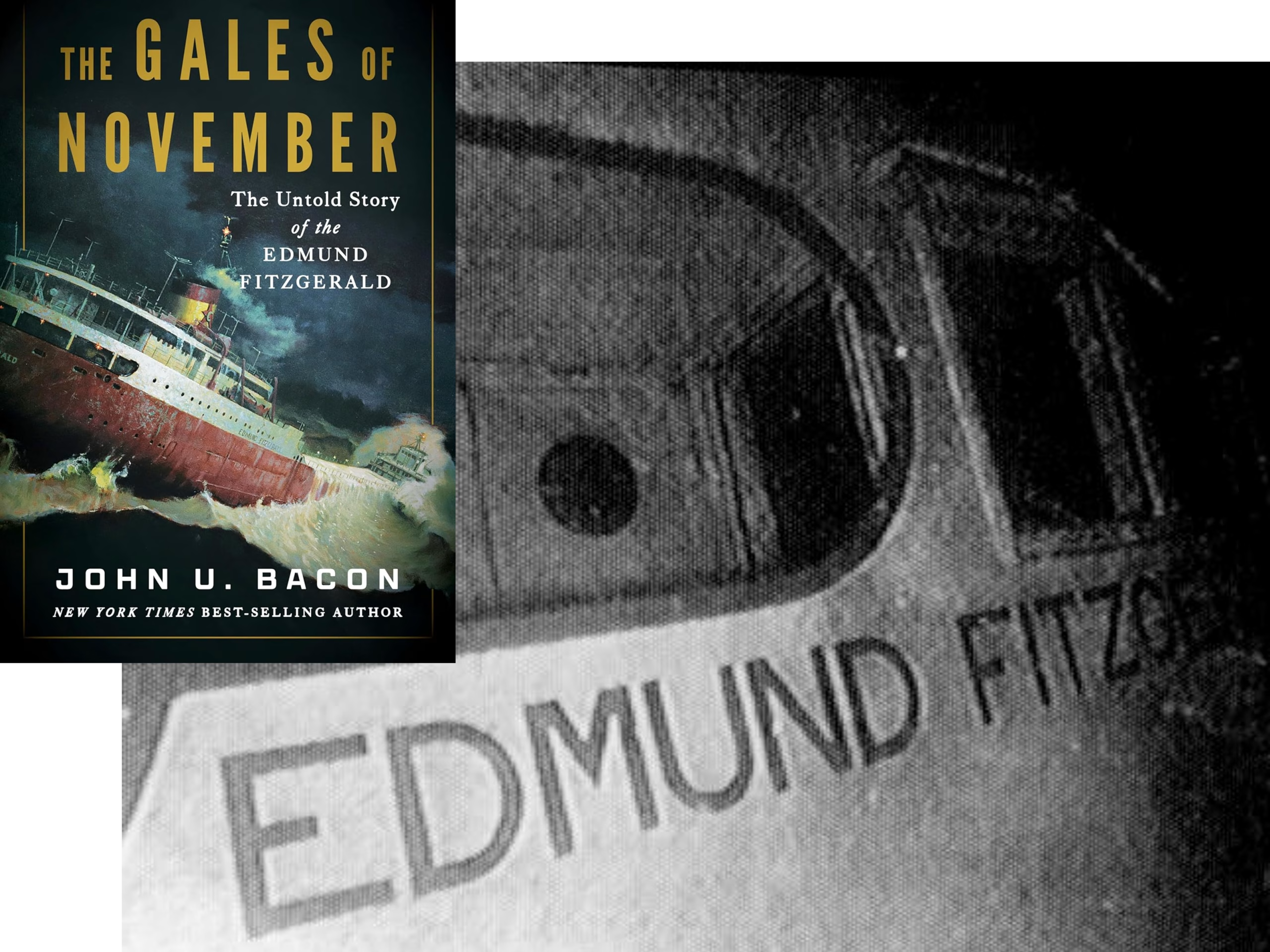
Discover the hidden dangers of the Great Lakes in John U. Bacon’s The Gales of November, a gripping new book on the Edmund Fitzgerald disaster.
In his forthcoming book The Gales of November, author John U. Bacon explores the unique, often underestimated dangers of the Great Lakes. While many view these inland seas as scenic and benign, Bacon’s work, set against the backdrop of the SS Edmund Fitzgerald sinking, presents the Great Lakes as a force of nature as formidable as any ocean.
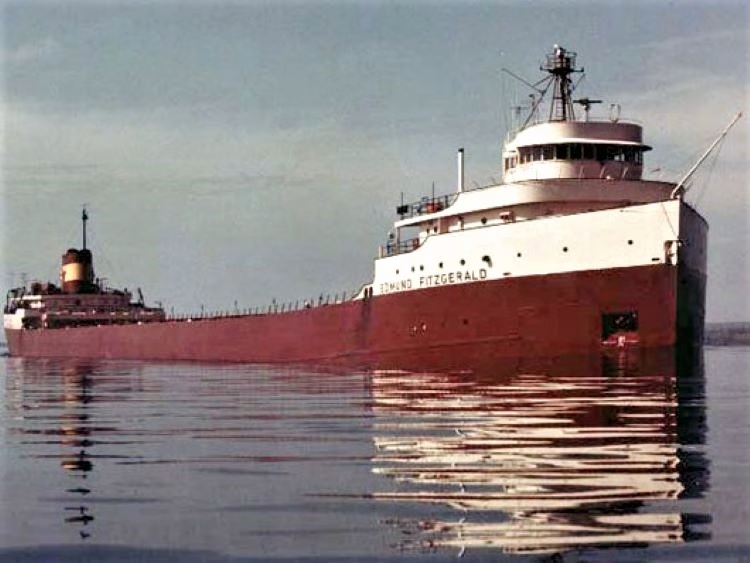
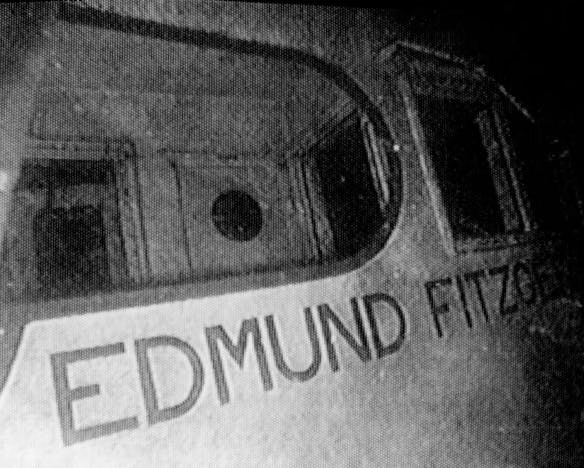
The Gales of November, scheduled for release later this year, marks the 50th anniversary of the sinking of the Edmund Fitzgerald. In the book, Bacon delves into the tragic November 1975 storm on Lake Superior, using the disaster as both a narrative anchor and a gateway to explore the larger world of Great Lakes shipping. He examines the Fitzgerald as an engineering marvel, highlights the freighter’s role in America’s industrial engine, and reconstructs the likely causes of its sudden demise. Bacon also profiles the 29 sailors who perished and the profound grief their families endured.
As he did in his acclaimed The Great Halifax Explosion, Bacon builds a vivid, suspenseful lead-up to the tragedy through a forensic accounting of environmental and mechanical factors. He avoids sensationalism, letting the cold realities of nature, steel, and human resilience carry the weight.
Vast and Powerful Beyond Expectation
Bacon’s work begins by redefining what most people think of as a “lake.” The five Great Lakes, Superior, Michigan, Huron, Erie, and Ontario, are not only large in surface area but unmatched in scale. Together, they hold over 80 percent of North America’s surface freshwater and more than 20 percent of the world’s supply.
Their combined surface area is equal to the entire region of New England plus New York State. Lake Superior alone spans 160 miles north to south and 350 miles east to west, larger than Ireland.
The Hidden Threat of Freshwater Waves
One of Bacon’s key insights is the behavior of freshwater waves. Unlike ocean waves, which stretch over long intervals and roll gently due to salt content, Great Lakes waves are sharp, steep, and fast. A 30-foot wave with a 10-second interval creates more than 3,700 pounds of pressure per square foot, more than enough to crush concrete.
These waves often arrive every four to eight seconds, leaving ships little room to recover. Long freighters face mechanical stress as they rise and fall in rapid succession. “Sagging” occurs when the bow and stern are supported by waves, but the center sags with no support, straining the ship’s structure. The reverse, “hogging,” happens when the center is held aloft over a wave while the ends drop downward. Bacon likens it to the bending of a paperclip back and forth. The constant flexing weakens steel and may have played a role in the Fitzgerald’s unexplained structural failure.
Navigating a Gauntlet, Not an Open Sea
One of the more astounding points Bacon makes is the comparison between ocean shipping and Great Lakes shipping. One example: Unlike ocean freighters that spend most of their time in open waters, Great Lakes ships operate in constrained environments. Captains must navigate narrow rivers, shallow shoals, crowded ports, and unpredictable coastal currents. Fog, snow squalls, and sudden weather shifts make these already tight maneuvers even more treacherous.
Piloting a Great Lakes freighter, Bacon suggests, is more akin to driving a semi-truck through a twisting mountain pass during a blizzard than commanding a ship on the ocean. One wrong move can send a vessel into catastrophe, with no time for correction.
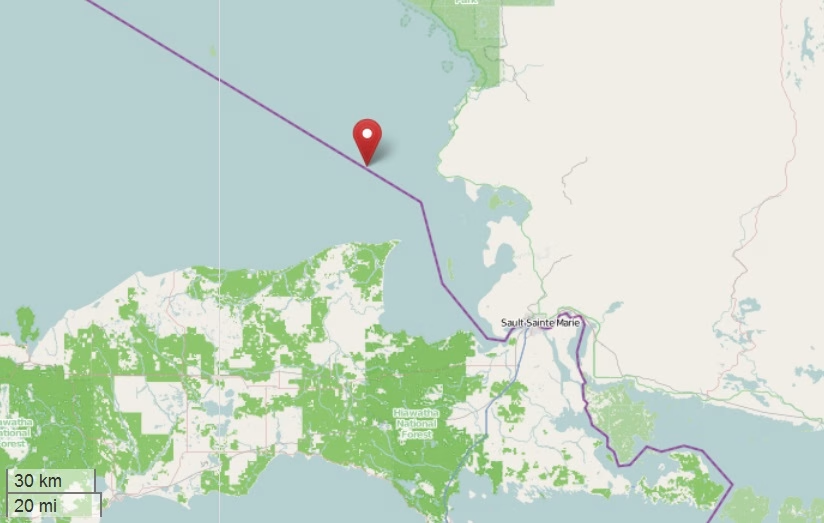
A Sobering Tribute to the Power of Inland Seas
Using the sinking of the Edmund Fitzgerald as a focal point, The Gales of November reveals the Great Lakes not as tranquil geographic features, but as dynamic and dangerous ecosystems shaped by physics, weather, and time.
Through precise, dramatic storytelling and deeply researched engineering insights, Bacon illustrates how these inland seas have claimed thousands of ships and lives, not due to negligence or recklessness, but because of the sheer force of nature.
The Gales of November offers readers not just a gripping account of a historic shipwreck, but a deep, resonant exploration of the Great Lakes’ unforgiving nature. It’s a must-read for anyone who wants to understand what really happened to the Edmund Fitzgerald, and why the lakes that look so calm from the shore demand our enduring respect. And adding to the poignancy of the tragedy, Bacon details Gordon Lightfoot’s painstaking creative journey in crafting his iconic ballad, The Wreck of the Edmund Fitzgerald.
The Gales of November will resonate with engineering enthusiasts, adventure seekers, and anyone drawn to poignant human stories. It builds slowly and methodically, like the gathering storm itself, until you’re pulled into the terrifying final moments, as if you’re aboard the ship. It’s not just a history lesson. It’s an immersive experience, one that leaves you breathless, as if you were aboard the ship yourself.
The Gales of November can be pre-ordered on Amazon.





 8123 Main St Suite 200 Dexter, MI 48130